
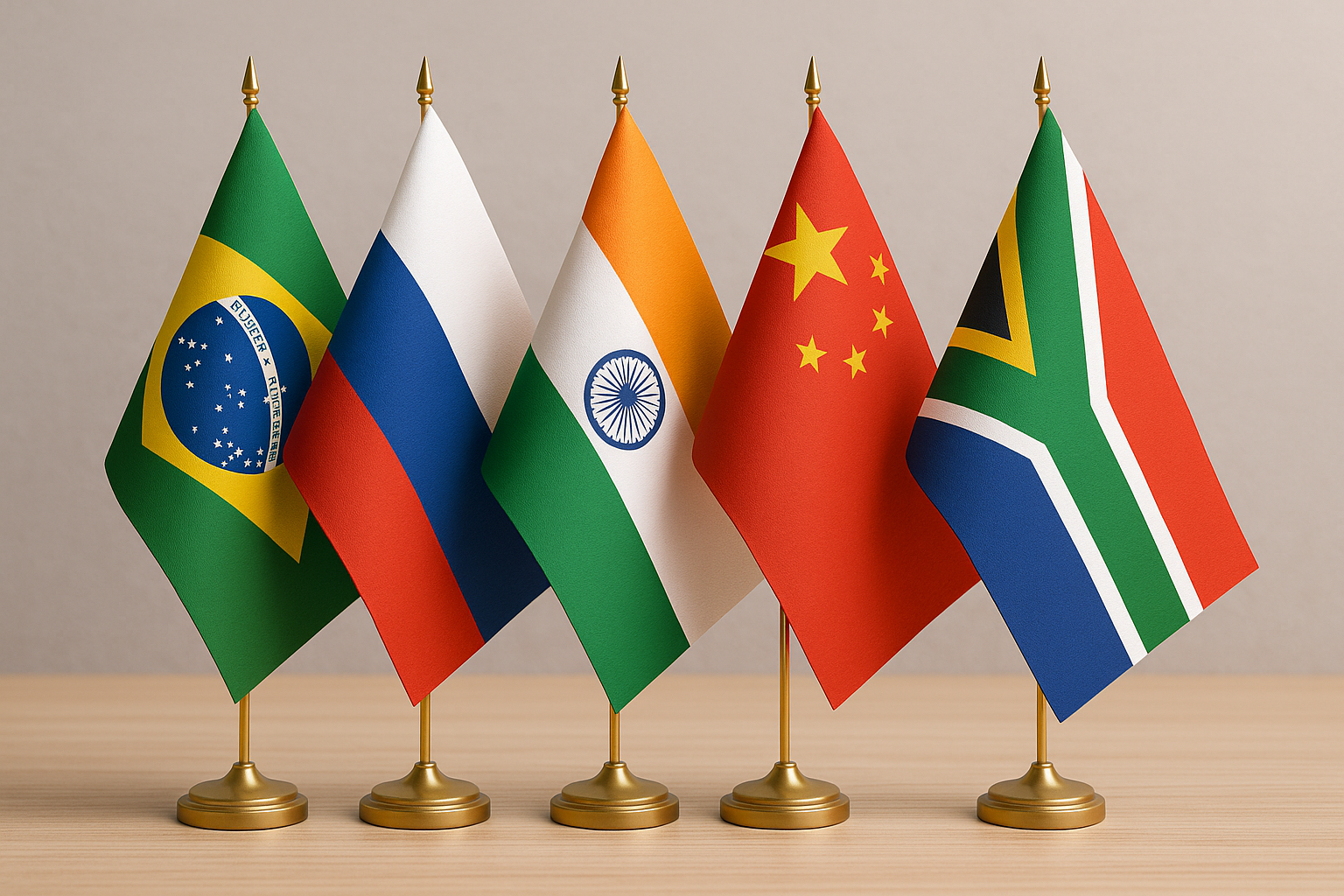
Global Markets Brace as BRICS Expansion Reshapes Trade and Dollar Dominance
The global financial order is undergoing a seismic shift as the BRICS economic alliance — originally comprising Brazil, Russia, India, China, and South Africa — expands its influence with the addition of new members and a growing push to challenge U.S. dollar supremacy in international trade.
At the core of the bloc’s ambitions is a coordinated effort to move away from Western-dominated financial systems. Member states, including recent additions such as Saudi Arabia, Iran, and Egypt, are exploring the creation of a common digital currency to facilitate cross-border trade without the U.S. dollar as an intermediary. While still in early stages, this effort reflects a growing trend: rising economies asserting more autonomy in global finance.
From oil transactions in Chinese yuan to new trade corridors bypassing traditional Western routes, businesses around the globe are being forced to rethink how they engage with emerging markets. Multinational corporations like Siemens, Tata Group, and Huawei have already started adapting supply chains and hedging foreign exchange risks in anticipation of this shift.
Wall Street and European markets have responded with caution. The U.S. dollar index has dipped slightly in recent weeks, while gold — often seen as a hedge against monetary volatility — has risen to near all-time highs. Analysts suggest this transformation won’t happen overnight, but it marks a clear evolution in the balance of economic power. As geopolitical alliances continue to fragment and regional trade agreements multiply, one thing is clear: the age of dollar dominance is entering a new chapter — and global businesses must be ready to adapt.